

Zoe Charlotte Koenig


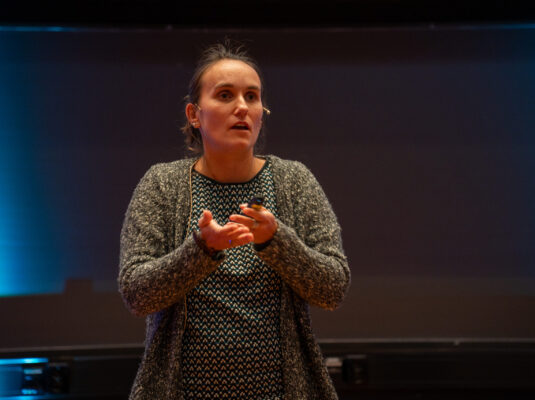
Zoe Charlotte Koenig
Stratification and nutrient of the changing Arctic Ocean: impacts on the base of the marine food web (STRACA)
HOST INSTITURE: AMB, BFE-fak
PERIOD: 2027-2032
GRANT: 12 MNOK (finansiert av TMF sin UiT-satsing)
WEB KOMMER SNART
TMFs UiT-satsing
How do climate change and environmental shifts affect the food at the base of the Arctic food web?
Microscopic algae in sea ice and the ocean form the foundation for nearly all food production in the Arctic Ocean. They are consumed by small crustaceans, such as Calanus, which store energy-rich fats and, in turn, serve as a vital food source for fish, seabirds, and marine mammals. Consequently, the quantity and quality of these algae have implications for the entire Arctic food web.
Climate change is leading to a reduction in sea ice and warmer ocean temperatures, while simultaneously altering the structure of the water column. This can affect the transport of nutrients required for algal growth. However, we still know very little about how this transport varies throughout the year, or how these changes impact the nutritional value of organisms at the base of the food web.
The STRACA project aims to investigate the relationship between the ocean’s physical conditions, nutrient availability, algal production, and the fat content of Calanus. Through year-round measurements, advanced sensors, field studies, and experiments, the project will track the flow of nutrients from sea ice and the ocean through the food web.
These findings will be integrated with climate projections to examine how these conditions might evolve in the future Arctic. In this way, STRACA will provide a deeper understanding of how climate change may affect both the quantity and quality of the food upon which the Arctic marine ecosystem depends.